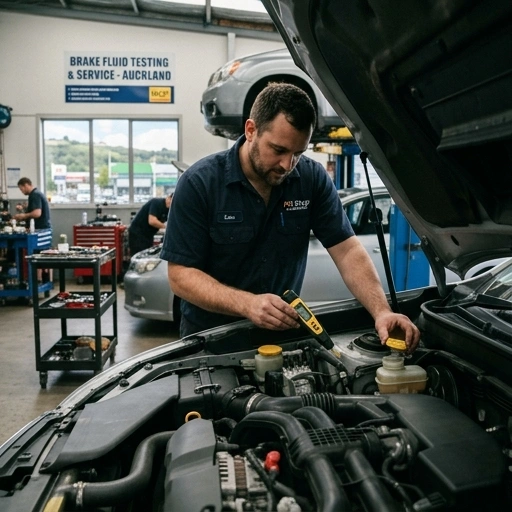
- Brake fluid boiling point is critical for safe braking, especially on Auckland’s hilly roads.
- Moisture absorption (hydroscopic nature) lowers brake fluid boiling point over time, reducing performance.
- Understanding DOT 3, DOT 4, DOT 5, and DOT 5.1 specs helps choose the right fluid for your vehicle.
- Regular brake fluid testing and replacement are essential in Auckland’s damp climate to maintain safety.
- High-performance fluids like Castrol React Performance DOT 4 offer improved boiling points for demanding driving.
Introduction to Brake Fluid Boiling Point
When driving Auckland’s steep and often damp hills, reliable braking is non-negotiable. One key factor often overlooked is the brake fluid boiling point. This property directly affects how well your brakes perform, especially under heavy usage or emergency stops.
We are a local Kiwi-owned business, Oil Pro, based in Auckland. We understand how the region’s climate and terrain impact braking systems. This guide explains why testing your brake fluid’s boiling point is crucial in 2026, helping you keep safe on the road.
We’ll cover brake fluid types, how moisture affects boiling points, testing methods, and top fluid recommendations including trusted brands like Castrol.
Why Brake Fluid Boiling Point Matters
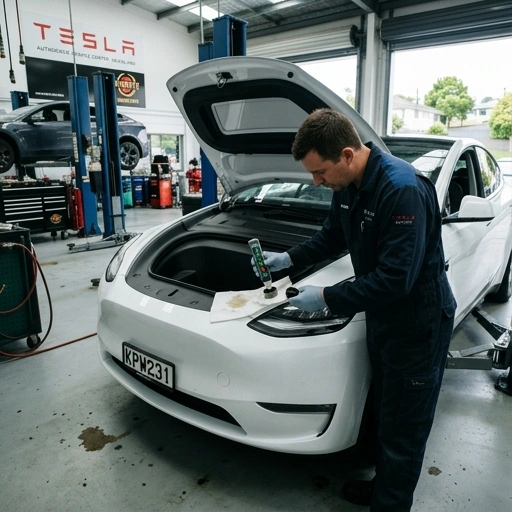
Brake fluid transfers force from your brake pedal to the brake pads, stopping your vehicle. If the fluid boils, it creates gas bubbles that compress, causing a spongy pedal feel or brake fade, which can be dangerous.
On Auckland’s hills, heavy braking generates heat that can push brake fluid to its boiling point. Moisture absorbed into brake fluid lowers this boiling point, increasing risk.
- Dry boiling point: Temperature at which fresh, moisture-free fluid boils.
- Wet boiling point: Lower boiling point after fluid absorbs moisture (hydroscopic effect).
Knowing your fluid’s boiling points helps maintain brake reliability and prevent failure, especially when descending long hills or in stop-start traffic.
Types of Brake Fluids and Their Boiling Points
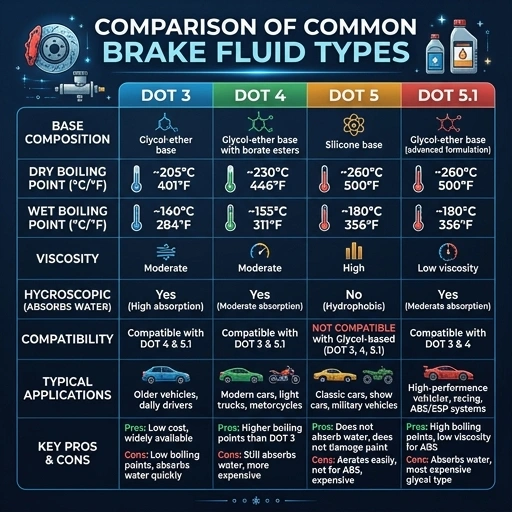
Brake fluids are classified by the Department of Transport (DOT) into several specifications based mainly on their boiling points and chemical compositions. The common types include DOT 3, DOT 4, DOT 5, and DOT 5.1.
| Brake Fluid Type | Chemical Composition | Typical Dry Boiling Point (°C) | Typical Wet Boiling Point (°C) |
|---|---|---|---|
| DOT 3 | Glycol Ether-based | 205 | 140 |
| DOT 4 | Glycol Ether with Borate Ester additives | 230 | 155 |
| DOT 5 | Silicone-based (non-hydroscopic) | 260+ | N/A (does not absorb moisture) |
| DOT 5.1 | Glycol Ether, compatible with DOT 3 and 4 | 270 | 180 |
DOT 3 and DOT 4 are most common in everyday vehicles, including many in Auckland. DOT 5 is silicone-based and does not absorb moisture but is not compatible with ABS or ESC systems, common in modern cars. DOT 5.1 combines high boiling points with compatibility.
Testing and Maintaining Brake Fluid in Auckland
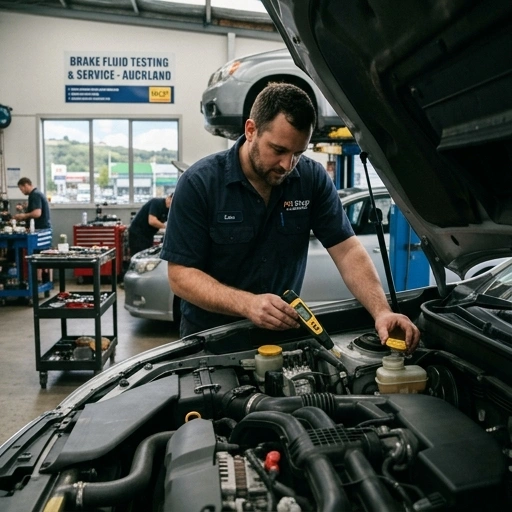
Auckland’s humid climate accelerates moisture absorption into brake fluid, reducing the boiling point and risking brake fade. Regular testing is essential to ensure your fluid remains safe.
Common testing methods include:
- Brake fluid test strips: Simple chemical strips that change colour depending on moisture content.
- Digital brake fluid testers: Electronic devices measuring percentage of water content.
Industry recommendation is to test fluid every 12 months or 20,000 km, whichever comes first, especially if you frequently drive hilly Auckland roads.
Replacing brake fluid when moisture content exceeds 3% helps maintain a safe wet boiling point above 140°C.
Recommended Brake Fluids for Auckland Drivers
Choosing the right brake fluid depends on your vehicle’s requirements and driving conditions. Many Auckland drivers benefit from high-performance fluids offering higher boiling points and improved safety margins.
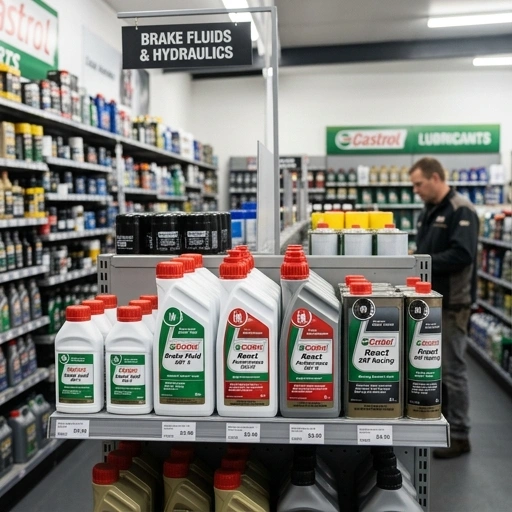
- Castrol React Performance DOT 4: Popular for its high dry boiling point (~265°C) and good wet boiling point, suitable for modern cars with ABS and ESC systems.
- Castrol REACT SRF Racing: Designed for racing but also ideal for hill-climbing or spirited driving in Auckland, with very high boiling points.
- Super DOT4: Offers enhanced boiling points over standard DOT4, good for heavier vehicles or frequent hill driving.
- 300 Plus Racing Brake Fluid: Suitable for extreme performance, but not typically needed for everyday Auckland roads.
Note that silicone-based DOT 5 fluids are not recommended for vehicles with ABS or ESC, which are common in New Zealand.
How to Check and Replace Brake Fluid: A Step-by-Step Guide
- Consult your vehicle manual: Confirm the recommended brake fluid type and replacement interval.
- Gather tools and fluids: Obtain the correct brake fluid (e.g., DOT 4 Castrol), test strips or digital tester, and safety gear.
- Test current brake fluid: Use test strips or a digital tester to measure moisture content.
- Decide on replacement: Replace fluid if moisture exceeds 3% or if the fluid is older than 2 years.
- Drain old fluid: Carefully bleed brake lines to remove old fluid, following safety precautions.
- Refill with new fluid: Add fresh brake fluid matching manufacturer specs.
- Bleed brakes: Remove air bubbles by properly bleeding each brake caliper.
- Test brake pedal feel: Ensure firm pedal response and no sponginess.
- Dispose of old fluid responsibly: Brake fluid is hazardous; take it to an appropriate disposal centre.
For safety and compliance, consider having a professional perform the test and replacement.
FAQ
What is the difference between dry and wet boiling points of brake fluid?
The dry boiling point is the temperature at which new, moisture-free brake fluid boils. The wet boiling point is lower and refers to fluid after it has absorbed moisture, which happens over time due to the hydroscopic nature of most brake fluids.
How often should I test my brake fluid in Auckland?
It is recommended to test brake fluid at least once a year or every 20,000 km, especially in Auckland’s damp climate where moisture absorption happens faster.
Can I use DOT 5 brake fluid in my car with ABS?
No, DOT 5 is silicone-based and incompatible with most ABS and ESC systems common in modern vehicles. Use DOT 3, DOT 4, or DOT 5.1 fluids as specified by your manufacturer.
What happens if my brake fluid boils while driving?
Boiling brake fluid creates gas bubbles that compress, leading to a soft or spongy brake pedal and reduced braking efficiency, which can be dangerous especially on steep roads.
Are high-performance brake fluids necessary for everyday Auckland driving?
While not always necessary, high-performance fluids like Castrol React Performance DOT 4 provide higher boiling points and extra safety margins, beneficial for drivers frequently tackling Auckland’s hills or carrying heavy loads.
Is brake fluid replacement covered by vehicle warranties?
Brake fluid maintenance is usually required to keep warranties valid. Check your vehicle’s guidelines and keep records of fluid testing and replacement.
Where can I safely dispose of old brake fluid in Auckland?
Old brake fluid is hazardous waste and should be taken to local hazardous waste collection centres or automotive workshops that accept fluid disposal in Auckland.
Book your brake fluid test and replacement with Oil Pro in Auckland
At Oil Pro, we are a local Kiwi-owned business based in Auckland, dedicated to keeping you safe on the road. We provide expert brake fluid testing and replacement services tailored to the challenges of Auckland’s hills and damp climate.
Our experienced team uses trusted products like Castrol React Performance DOT 4 to ensure your brakes perform reliably. We know how important a good car and safe brakes are for your peace of mind.
Book your brake fluid test with Oil Pro today. Call us at 022 033 1186 or visit our workshop in Māngere. Stay safe, stay confident on Auckland’s roads with Oil Pro.